Key takeaways
- The age of the home is a clue to the pipe material.
- Clay has open joints that roots love, and cast iron corrodes from the inside.
- Orangeburg fiber pipe deforms and collapses with age.
- PVC and HDPE resist roots and corrosion and are the usual choices today.
Clay tile
Vitrified clay pipe was common for decades and is strong in compression, but it comes in short sections joined at many joints. Those joints let in roots and shift as the ground moves.
Clay lines are often good candidates for lining when the pipe is otherwise sound.
Cast iron
Cast iron was used for building drains and some laterals. It is durable, but it corrodes from the inside, forming scale that narrows the pipe and eventually thins the wall. Joints can also leak.
Cast iron often benefits from jetting and lining, or replacement when walls are thin.
Orangeburg fiber
Orangeburg was a tar-impregnated fiber pipe used mainly in the mid-20th century. It softens, ovalizes and can collapse as it ages, so it is usually replaced rather than repaired.
If a home from that era has never had its lateral replaced, a camera check is worthwhile.
PVC and HDPE
PVC is the common choice for new laterals, joined with solvent-welded fittings that keep roots out. HDPE is a flexible, fused pipe often used for trenchless replacement, because it can be pulled through the old path and has no joints.
Both resist corrosion and roots and are installed on a stable bed at the proper slope.
Official sites to explore
Brand names and logos belong to their owners. These links open the official websites in a new tab, and we are not affiliated with them.
- Plastics Pipe InstituteIndustry association for plastic pipe, including HDPE.
- Uni-Bell PVC Pipe AssociationTechnical resources on PVC pipe.
- NASSCOStandards and resources for pipeline assessment and rehabilitation.
- American Society of Civil EngineersEngineering society with infrastructure resources.
- Metro Nashville Codes DepartmentPermits and plumbing code information for Davidson County.
Quick answers
How can I tell what my sewer pipe is made of?
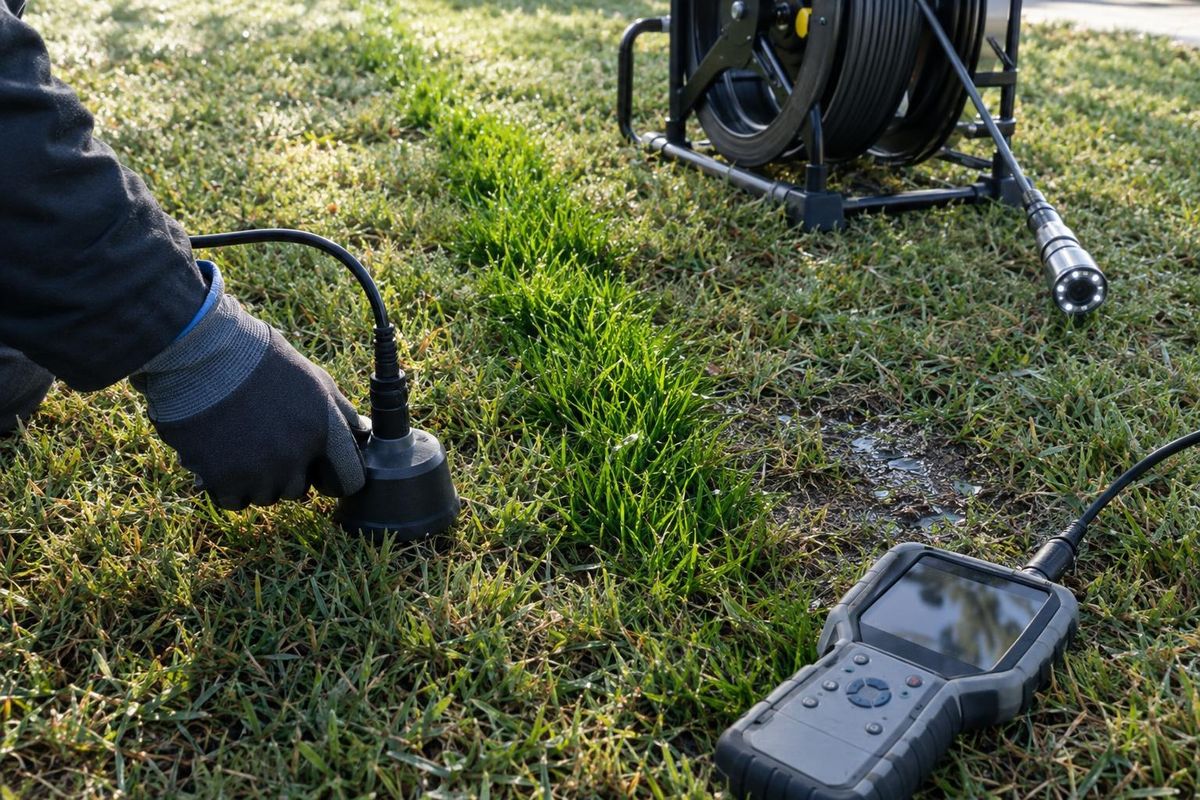
A camera inspection usually shows the material, and the age of the home is a clue.
Is PVC better than clay?
PVC has fewer joints and resists roots and corrosion, which is why it is the usual choice for new lines.
Can an old line be lined?
Often yes, if the pipe is round and continuous. Collapsed sections must be replaced.